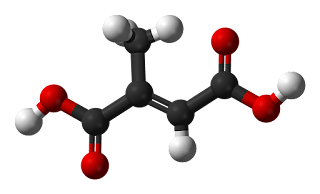
Citric acid is predominantly used as a flavouring and preserving agent, especially in soft drinks. Citric acid provides a sour, and refreshing flavour which offsets the sweetness of many drinks including soft drinks.
The acidity of citric acid makes it an excellent food and drink preservative. The presence of acid in an environment inhibits the growth of bacteria; so many long-life products contain it.
Citric acid is mainly produced by the microbial fermentation of carbohydrates such as molasses, corn sugar, cane sugar, beet, etc. It is also extracted from citrus fruits as they contain up to 8% of citric acid. Other natural sources include pineapples, tomatoes, broccoli, carrots, and berries.
It is an important metabolite in the pathway of all aerobic organisms. It has a role as a food acidity regulator, a chelator, an antimicrobial agent and a fundamental metabolite.
At room temperature, citric acid is a white crystalline powder. Although it is odourless, it has an acidic taste. The solid has density of 1.66 g/mL, melting point of 153 °C and boiling point of 175 °C. It is an α-hydroxy acid (AHA). This means it has one hydroxyl group attached to the α position of the acid.
Citric Acid is a weak acid with a chemical formula C6H8O7. It can exist either in an anhydrous (water-free) form, or as a monohydrate that contains one water molecule for every molecule of citric acid. It is a tribasic acid, as it has three COOH groups that can react with three base molecules. It commonly exists as anhydrous (water-free) form or as a monohydrate (with one molecule of water). The monohydrate can be converted to the anhydrous form when it is heated to about 78 °C.
Properties of citric acid
What makes soft drinks so noteworthy is that, despite not being essential, their consumption continues to rise. They are entirely human inventions—both as a product and as a market. In fact, soft drinks were among the first branded goods to achieve truly global reach.
Showing posts with label citric acid. Show all posts
Applications of citric acid
Citric acid (C6H8O7) is a weak organic tricarboxylic acid found in citrus fruits. This organic acid is derived from the Latin word citrus and synthesized by the biochemical reaction in living cell via the Krebs cycle.
It is one of the most important commercially value-added products and its application in food processing industry.
Citric acid is a good preservative and acidic in taste. Citric acid can be easily manufacture and easily soluble. It is used in flavoring agent and increases stability of the fruit.
The acid is an acidulant, preservative, emulsifier, flavorant, sequestrant and buffering agent widely used across many industries especially in food, beverage, pharmaceutical, nutraceutical and cosmetic products.
In beverages (wines/juices/soft drinks/syrups) citric acid main function as an acidulant, used in carbonated and noncarbonated beverages for flavoring and buffering, used in dry powder beverages for flavor and pH control.
Applications of citric acid
It is one of the most important commercially value-added products and its application in food processing industry.
Citric acid is a good preservative and acidic in taste. Citric acid can be easily manufacture and easily soluble. It is used in flavoring agent and increases stability of the fruit.
The acid is an acidulant, preservative, emulsifier, flavorant, sequestrant and buffering agent widely used across many industries especially in food, beverage, pharmaceutical, nutraceutical and cosmetic products.
In beverages (wines/juices/soft drinks/syrups) citric acid main function as an acidulant, used in carbonated and noncarbonated beverages for flavoring and buffering, used in dry powder beverages for flavor and pH control.
Applications of citric acid
The importance of acid in carbonated beverages
It is most suitable for foods, fruit juices and soft drinks that are naturally in an acidic pH range and present naturally in some materials.
Colas, sodas and beers are known to be among the most acidic beverages consumed in modern society, the acidic nature of sodas (pH ∼3) is derived from conversion of dissolved CO2 to HCO3− and H+ by interaction with H2O as well as additives such as citric acid and phosphoric acid.
Acids are added to beverages and compose a flavor profile giving the beverage a distinctive taste. Acids provide a tartness and tangy taste that helps to balance the sweetness of sugar present in the beverage; they are key factors in the taste of the beverage. Human saliva is almost neutral (pH approximately 6.8), and when human taste receptors interact with acids in food or drink this sensation is perceived as sourness. Acids also play an important role in the natural preservation of soft drinks.
The most common acidulants in soft drinks are citric acid and phosphoric acid.
Phosphoric acid is added to cola drinks to impart tartness, reduce growth of bacteria and fungi, and improve shelf-life. Phosphoric acid can strengthen the acidity. It has the same characteristics as the cola flavors, which are dry and sometimes balsamic.
Citric acid, a substance naturally occurring in citrus drinks and added to many others, imparts a tangy flavor and functions as a preservative. Malic acid is used when strong flavor enhancement is required and mostly in combination with citric acid.
In addition to phosphoric and citric as the major acidulants, some other organic acids such as tartaric, malic and ascorbic acids have special uses in the carbonated soft drinks industry.
The importance of acid in carbonated beverages
Colas, sodas and beers are known to be among the most acidic beverages consumed in modern society, the acidic nature of sodas (pH ∼3) is derived from conversion of dissolved CO2 to HCO3− and H+ by interaction with H2O as well as additives such as citric acid and phosphoric acid.
Acids are added to beverages and compose a flavor profile giving the beverage a distinctive taste. Acids provide a tartness and tangy taste that helps to balance the sweetness of sugar present in the beverage; they are key factors in the taste of the beverage. Human saliva is almost neutral (pH approximately 6.8), and when human taste receptors interact with acids in food or drink this sensation is perceived as sourness. Acids also play an important role in the natural preservation of soft drinks.
The most common acidulants in soft drinks are citric acid and phosphoric acid.
Phosphoric acid is added to cola drinks to impart tartness, reduce growth of bacteria and fungi, and improve shelf-life. Phosphoric acid can strengthen the acidity. It has the same characteristics as the cola flavors, which are dry and sometimes balsamic.
Citric acid, a substance naturally occurring in citrus drinks and added to many others, imparts a tangy flavor and functions as a preservative. Malic acid is used when strong flavor enhancement is required and mostly in combination with citric acid.
In addition to phosphoric and citric as the major acidulants, some other organic acids such as tartaric, malic and ascorbic acids have special uses in the carbonated soft drinks industry.
The importance of acid in carbonated beverages
Citric acid in soft drink
Organic acids are added which contribute to the taste and flavor of the drink.
Citric acid is most commonly employed, with others like phosphoric acid, tartaric acid, lactic acid and malic acid, the latter two being added in very small amounts.
It was originally obtained commercially from lemons, limes, or bergamots by pressing the fruit, concentrating the expressed juice and precipitating citric acid as its calcium salt by running in, with constant stirring, a slurry of chalk and water.
It is an intermediate organic compound in the tricarboxylic acid cycle. Citric acid is a six carbon tricarboxylic acid, which was first isolated from lemon juice.
Citric acid is used soft drinks and other beverages to create slightly tart refreshing flavor and balance sweetness.
Present day soft drinks formulations usually employ the anhydrous form, which has cost-in-use advantages over the major traditionally used monohydrate.
Citric acid in soft drink
Citric acid is most commonly employed, with others like phosphoric acid, tartaric acid, lactic acid and malic acid, the latter two being added in very small amounts.
It was originally obtained commercially from lemons, limes, or bergamots by pressing the fruit, concentrating the expressed juice and precipitating citric acid as its calcium salt by running in, with constant stirring, a slurry of chalk and water.
It is an intermediate organic compound in the tricarboxylic acid cycle. Citric acid is a six carbon tricarboxylic acid, which was first isolated from lemon juice.
Citric acid is used soft drinks and other beverages to create slightly tart refreshing flavor and balance sweetness.
Present day soft drinks formulations usually employ the anhydrous form, which has cost-in-use advantages over the major traditionally used monohydrate.
Citric acid in soft drink
Subscribe to:
Posts (Atom)
The Most Popular Posts
-
Most sweet drinks, including diet soft drinks, contain orthophosphoric, carbonic and citric acids; malic, tartaric and other organic acids m...
-
Phosphoric acid plays an essential role in the modern food and beverage industry, where it serves multiple functions that improve product qu...
-
Charles George Guth (June 3, 1877 – May 24, 1948) was an American businessman. Guth apparently had spent most of his life prior to th...
-
Soft drinks typically exhibit a low pH, making them acidic. This acidity results from specific ingredients and additives used in their formu...
-
Soft drinks rely heavily on colorings to create an appealing appearance, significantly influencing consumer preferences. The color of a drin...